A specialized manual therapy targeting tension in fascia caused by trauma, posture, or inflammation.
Myofascial Release is a therapeutic approach that addresses the root causes of chronic pain and movement dysfunction. Unlike conventional treatments that focus solely on symptoms, this technique works with the body’s connective tissue system to restore natural alignment and function.
The Fascia System
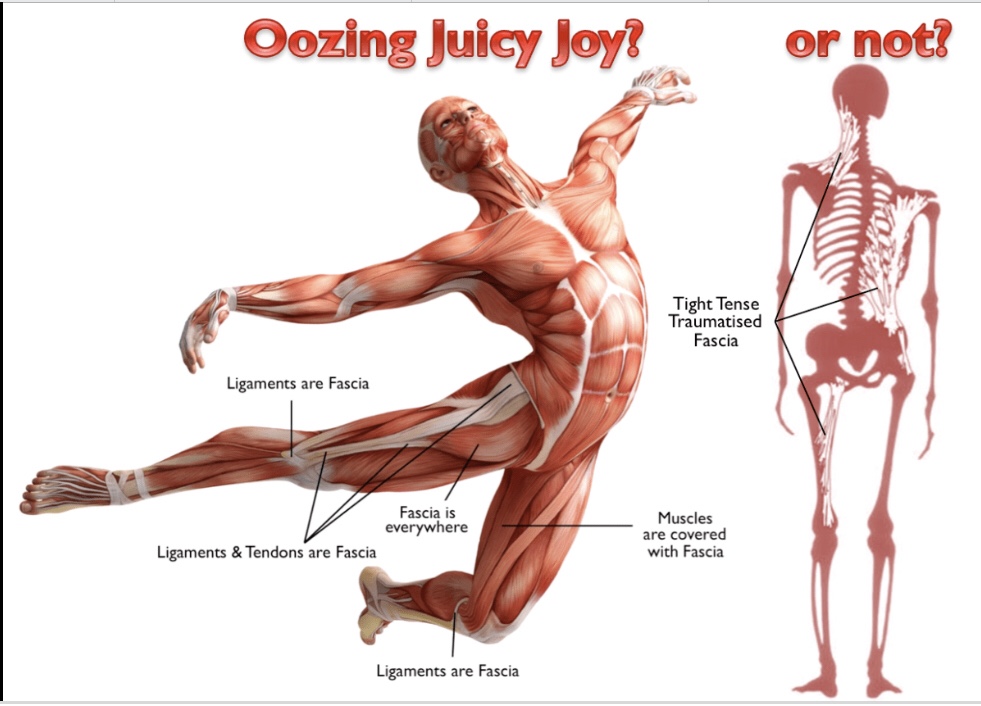
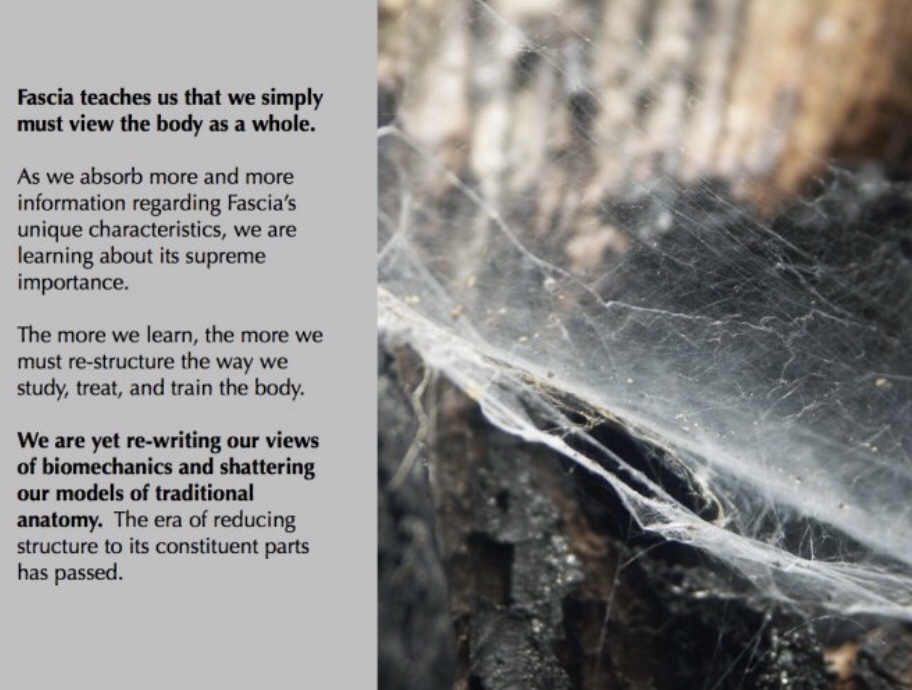
Fascia is a continuous three-dimensional web of connective tissue that surrounds and permeates every muscle, bone, nerve, and organ in the body. This intricate network provides structural support, facilitates movement, and plays a crucial role in force transmission throughout the body.
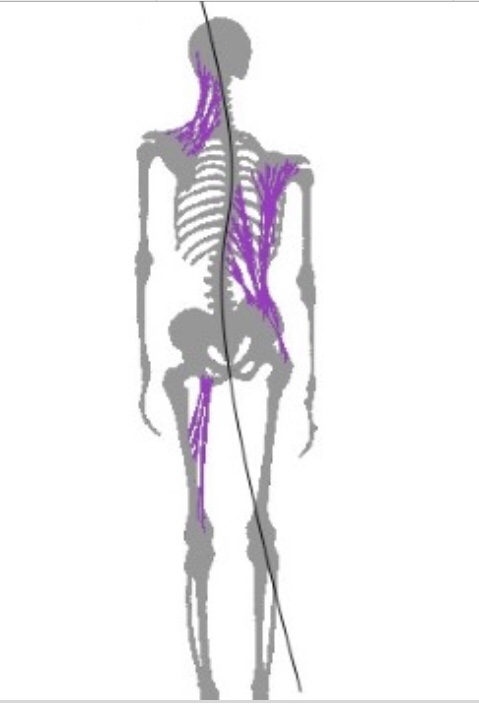
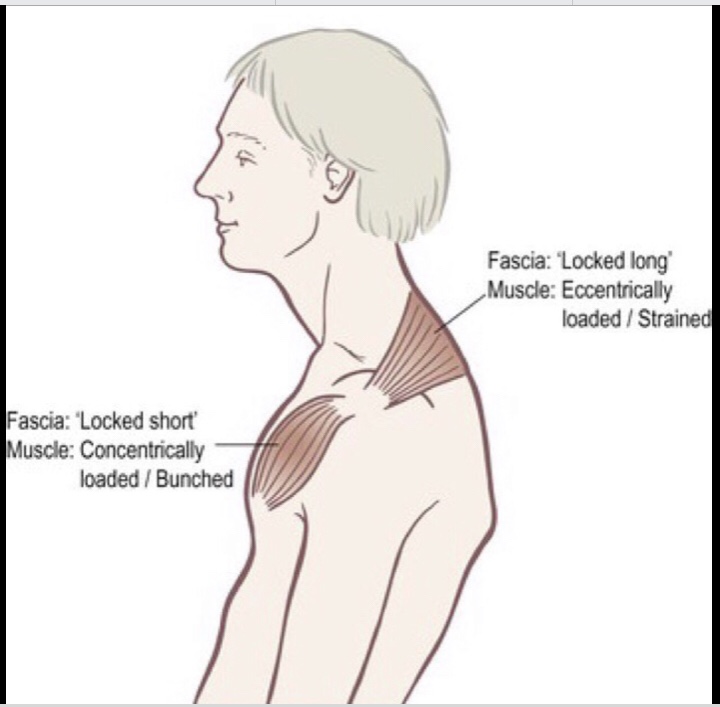
When fascia becomes restricted due to injury, poor posture, surgery, or inflammation, it can create significant dysfunction. Research indicates that fascial restrictions can exert pressure of up to 2,000 PSI on pain-sensitive structures—equivalent to the pressure found in a car tire. This immense force compresses nerves, limits range of motion, and generates chronic pain patterns that often resist traditional treatment approaches.
By releasing these restrictions through specialized manual techniques, Myofascial Release helps eliminate the source of pain rather than merelyo masking symptoms, promoting lasting healing and improved quality of life.
Structural Integration Philosophy
MPRT operates within the tradition of Structural Integration, viewing the body as an integrated whole rather than a collection of isolated parts.
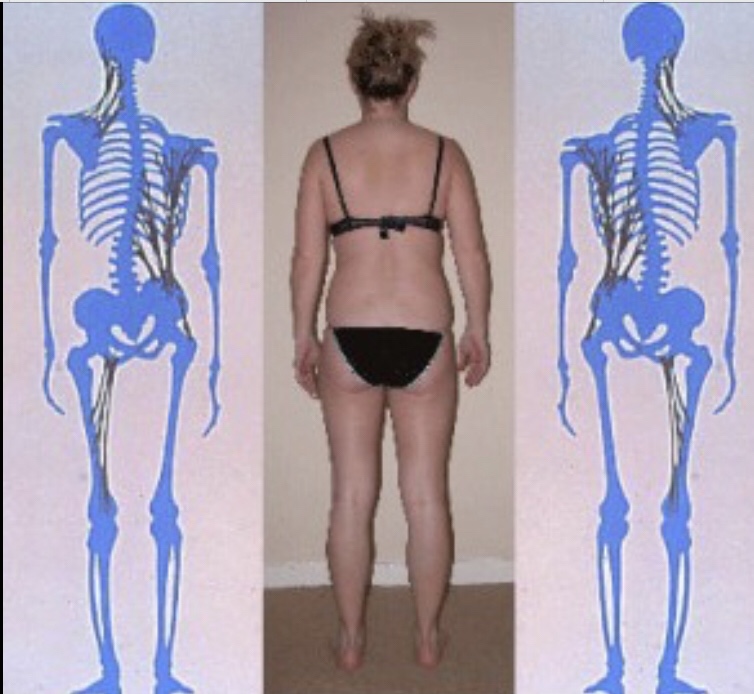
Structural Integration represents a paradigm shift in therapeutic bodywork. Rather than treating individual symptoms or localized pain points, these methods recognize that the body functions as a unified, interconnected system. Tension or restriction in one area inevitably affects distant regions through the continuous fascial network.
Related Modalities
MPRT shares philosophical roots with several established therapeutic approaches:
• Rolfing® (Structural Integration) — Developed by Dr. Ida Rolf, this method systematically reorganizes the body’s connective tissue through ten-session protocols, emphasizing gravity alignment and segmental relationships.
• John F. Barnes Myofascial Release Approach — A gentle, sustained pressure technique that facilitates the body’s natural healing mechanisms through fascial unwinding and rebounding.
• Thomas Myers’ Anatomy Trains — Myofascial Meridians theory maps the longitudinal connections through the fascial web, demonstrating how tension patterns travel along specific pathways throughout the body.
Like these approaches, MPRT acknowledges that lasting change requires addressing the body’s structural relationships and movement patterns, not just local tissue dysfunction.
The MPRT Method
A distinct therapeutic approach emphasizing gentle intervention, active client participation, and direct tissue connection.
Core Techniques:
Gentle Sustained Pressure
Unlike aggressive deep tissue techniques, MPRT applies gentle, sustained pressure into fascial restrictions. This approach allows the tissue to soften and elongate naturally without triggering protective guarding responses.
Fascial Unwinding
The technique utilizes fascial unwinding—subtle, spontaneous movements that emerge as restrictions release. This process follows the tissue’s inherent intelligence rather than forcing mechanical change.
Skin-on-Skin Contact
Performed directly skin-on-skin without oils or lubricants. This direct connection allows the practitioner to accurately detect fascial restrictions and subtle tissue responses, ensuring precise therapeutic intervention.
Active Participation
Clients are active participants in their healing journey. Through mindful awareness, breathing techniques, and movement integration, individuals learn to recognize and release holding patterns in daily life.
What MPRT Is Not
MPRT does not employ cupping, instrument-assisted techniques, or passive modalities. The work is hands-on, interactive, and requires conscious engagement from both practitioner and client to achieve optimal outcomes.
The Three Body Systems
Understanding the architectural framework of the human body reveals why fascial health is fundamental to overall wellness.
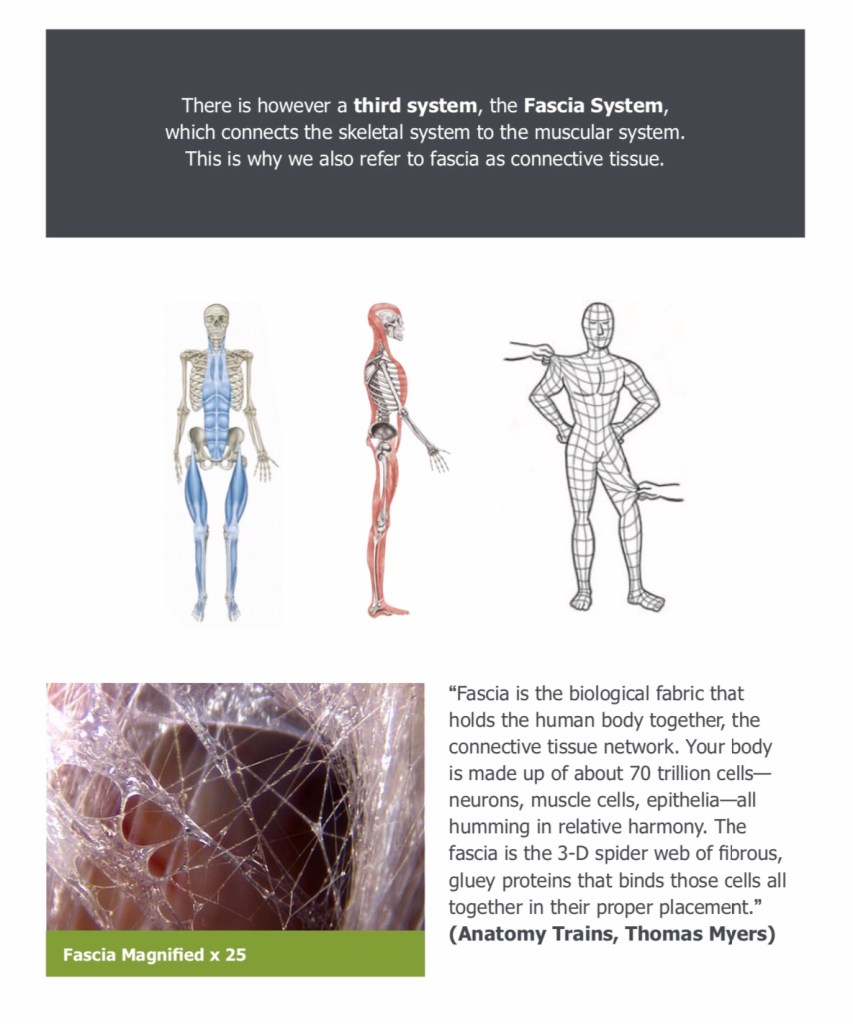
Traditional anatomy education emphasizes two primary systems: the skeletal system providing structural framework, and the muscular system generating movement. However, contemporary research has elevated a third system to equal importance—the fascial system.
“Fascia is the biological fabric that holds the human body together, the connective tissue network. Your body is made up of about 70 trillion cells—neurons, muscle cells, epithelia—all humming in relative harmony. The fascia is the 3-D spider web of fibrous, gluey proteins that binds those cells all together in their proper placement.”
Anatomy Trains, Thomas Myers
Fascia magnified x25 microscopic view
Skeletal System 🦴
The passive structural framework providing shape, support, and protection for vital organs. Bones serve as attachment points and levers for movement.
Muscular System 💪
The active contractile tissue generating force and producing movement through contraction and relaxation across joints.
Fascial System 🕸️
The integrative matrix. Connects, surrounds, and influences every other system. Transmits force, maintains structural integrity, and facilitates communication throughout the body.
Fascia functions as the “third system”—the continuous connective tissue web that integrates skeletal and muscular function into coordinated movement. Without healthy fascia, bones would lack positional relationship and muscles would generate uncoordinated force. The fascial system provides the architectural tension-compression balance that allows efficient, pain-free movement.
When fascial restrictions develop, they disrupt this integration, causing compensatory patterns that strain the skeletal and muscular systems. MPRT addresses these restrictions at their source, restoring harmony across all three systems.
Connective Tissue Architecture
Specialized connective tissues serve distinct mechanical functions while maintaining systemic integration through the fascial web.
While all connective tissues share common components—cells, fibers, and ground substance—their structural organization determines specific functional roles. Understanding these distinctions clarifies why fascial work addresses broader patterns than localized ligament or tendon treatment.
🔒 Ligaments
Bone to Bone
Dense, regular connective tissue providing joint stability by connecting adjacent bones. Ligaments restrict excessive movement and guide joint mechanics, containing proprioceptive sensors that protect against injury.
🔗 Tendons
Muscle to Bone
Robust collagenous structures transmitting contractile force from muscle to bone. Tendons enable movement while storing and releasing elastic energy during locomotion and activity.
🕸️ Fascia
Integrates All Systems
The omnipresent connective tissue enveloping muscles (epimysium, perimysium, endomysium), organs, nerves, and vessels. Unlike ligaments and tendons which connect specific points, fascia is continuous throughout the body, creating a unified structural network that adapts to mechanical stress, injury, and movement patterns.
The Continuity Principle
While ligaments and tendons serve specific connection points, fascia represents the unifying matrix that contextualizes these structures within the whole body. A restriction in the lumbar fascia may manifest as shoulder dysfunction; plantar fascial tension can influence cervical alignment. This global interconnectedness defines the MPRT approach to assessment and treatment.



 Matthew Rasey, LMT ~ Unity Stone Health